Imagine Jasper Avenue, Flood Mitigation & Stormwater Infrastructure
Client:
PCL
Location:
Edmonton, Alberta
Year:
2020-2021
Project Scope
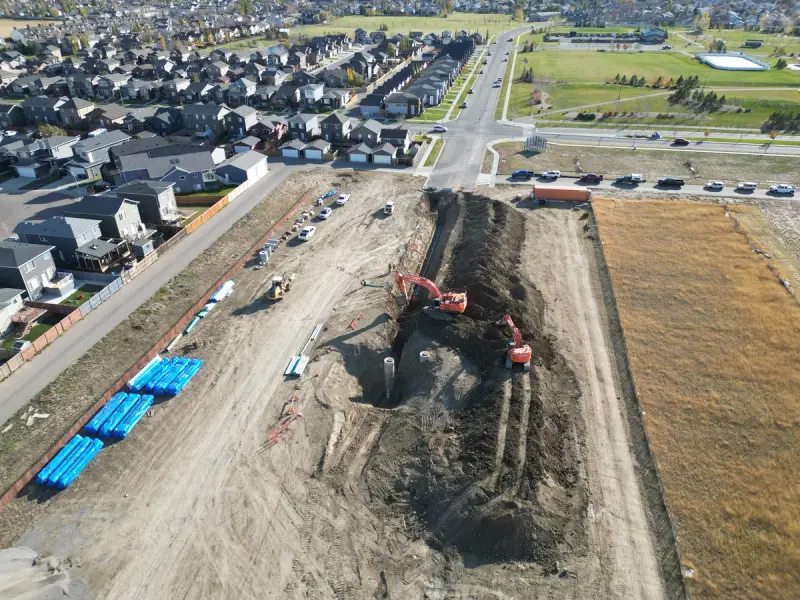
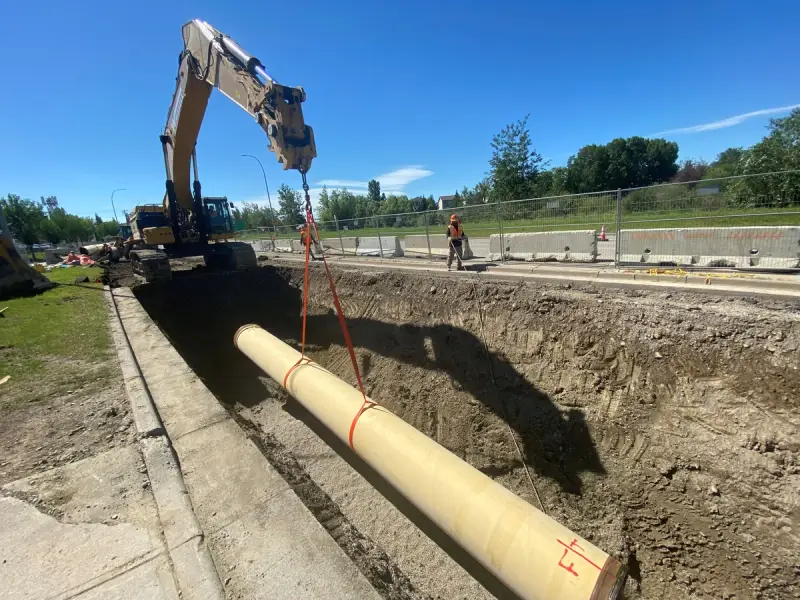
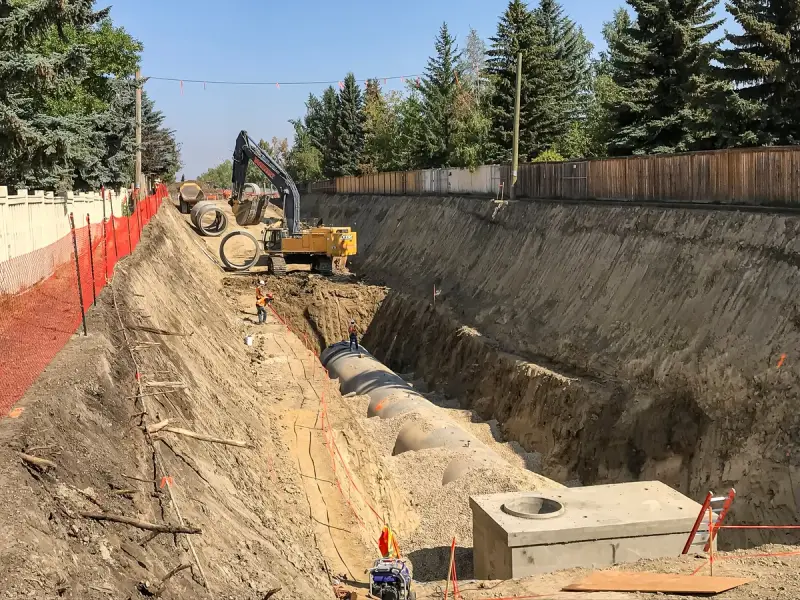
The Imagine Jasper Avenue Flood Mitigation Project addressed chronic surface flooding between 109 Street and 110 Street in Edmonton by constructing a high-capacity underground stormwater retention system beneath one of the city's busiest downtown corridors. Valued at $5.1 million, the project involved complete reconstruction of the street above and below ground. Whissell served as civil subcontractor to PCL, executing deep utility infrastructure including a 3.66 m × 3.66 m × 139 m underground stormwater retention structure capable of handling over 18,000 cubic metres of water.
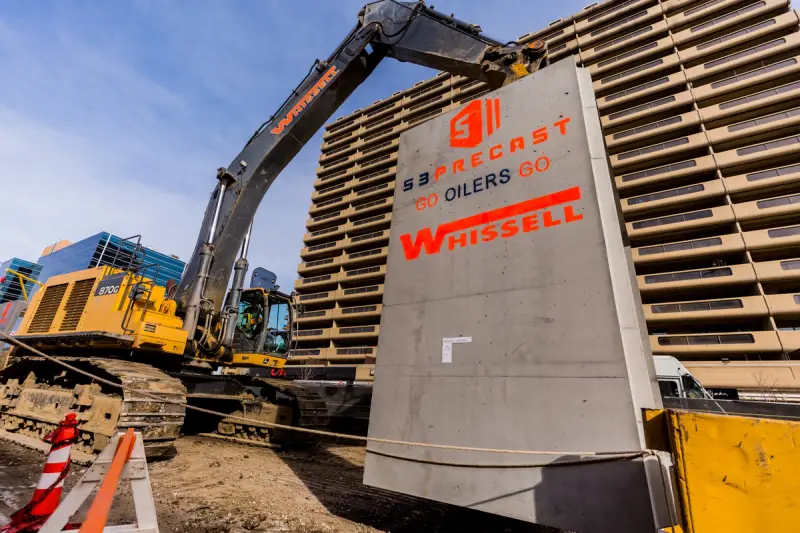
- 3.66 m × 3.66 m × 139 m underground stormwater retention structure (71 pre-cast concrete sections)
- 260 m of 3.5 m × 3.5 m box culvert for high-capacity conveyance
- ~500 LM of drainage pipe (100mm to 1050mm diameter); 289 m of catch basin leads
- 50+ catch basins and manholes (900mm to 2100mm diameter), including a perched 1800mm manhole at 9 m depth
- Abandonment of 387 m of existing underground piping; full surface restoration
- Deep excavation adjacent to live traffic, brick combination sewers, and major utility lines
Challenge & Mitigation
Executing deep excavations at 9 metres depth adjacent to live traffic, existing brick combination sewers, and primary power transmission lines required disciplined staging and enhanced groundwater protection. A heavy rainfall event during a critical deep excavation phase tested the team's contingency protocols. Whissell's proactive sequencing and collaborative issue resolution with PCL and EPCOR maintained schedule and quality without compromising safety.
Value Add Solution
The original design specified a 3048mm concrete pipe spanning 250 metres. Whissell proposed replacing this with a box culvert system (3.66 m x 3.66 m x 139 m), collaborating with PCL and EPCOR to implement the revised storm tank design. The result was significant installation savings, a reduced construction schedule, and improved constructability, while maintaining full hydraulic performance.