Lower Sarcee South Feedermain Phase 2, Parts 1 & 2
Client:
City of Calgary
Location:
Calgary, Alberta
Year:
2023
Project Scope
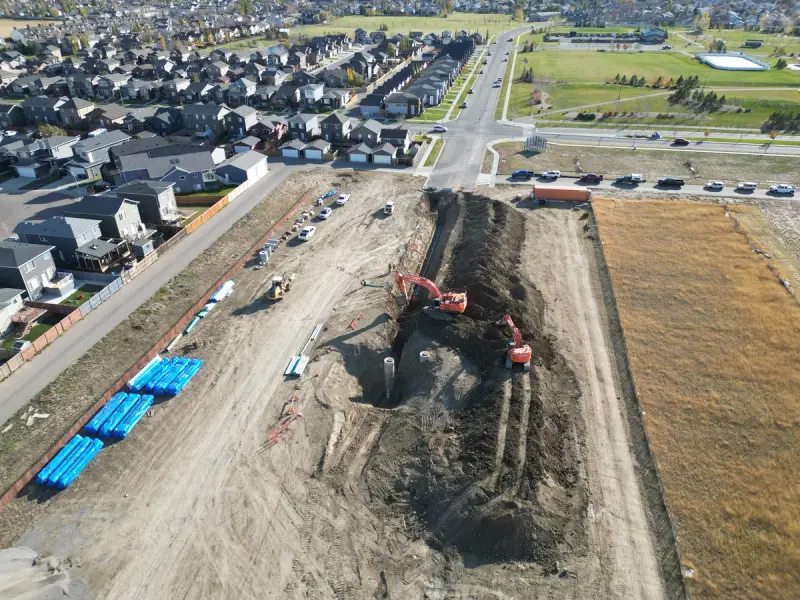
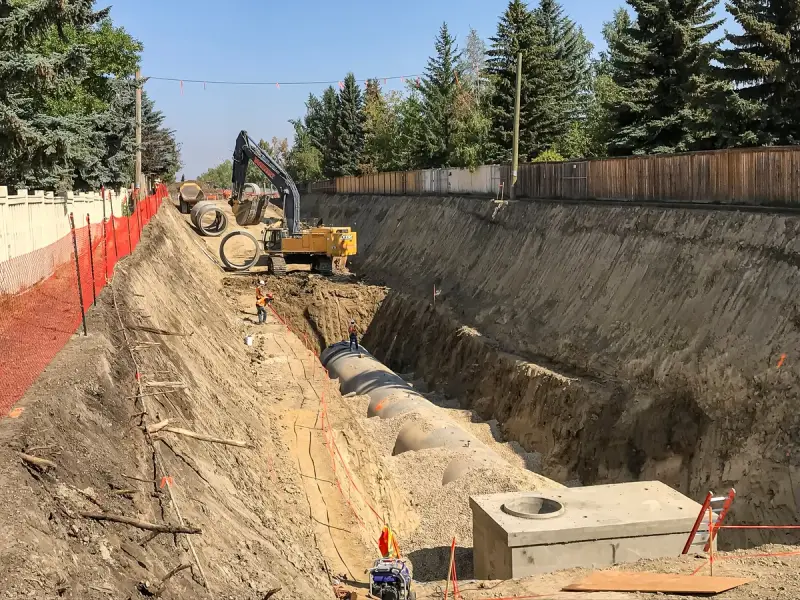
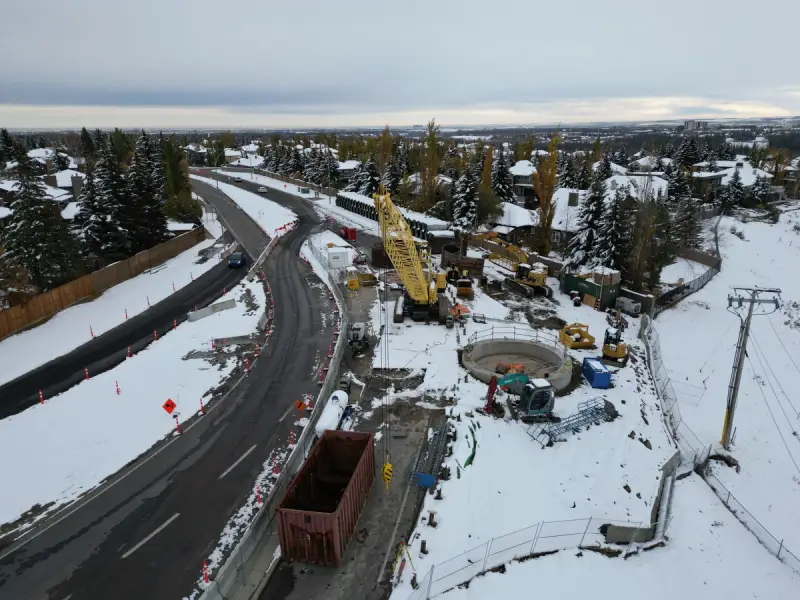
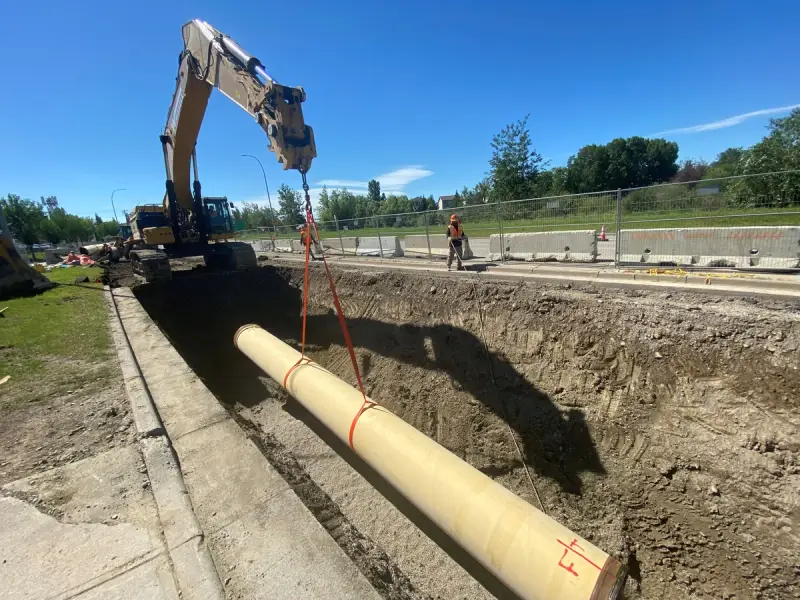
Whissell served as Prime Contractor for both parts of the City of Calgary Lower Sarcee South Feedermain Phase 2 project, a critical water transmission upgrade in southwest Calgary. The two-part project involved the installation of over 5,400 m of 1,050 mm diameter feedermain through constrained urban roadways, residential corridors, and a major intersection, with multiple trenchless crossings and live tie-ins to the existing system.
- Part 1: 2,660 m of 1,050 mm diameter feedermain within the Transportation Utility Corridor and along James McKevitt Road SW and Sheriff King Street SW; two valve chambers; seven watermain alterations; two trenchless crossings (one under a wetland, one under a roadway)
- Part 2: 2,750 m of 1,050 mm diameter feedermain along Sheriff King Street SW adjacent to residential areas, businesses, and an assisted living facility; tie-in to the 210th Avenue Pump Station; one valve chamber; eight watermain alterations; deep trenchless crossing at a major intersection
- Live tie-ins to existing feedermain infrastructure at multiple locations
- Full traffic accommodation and business access maintenance throughout
Challenge & Mitigation
Part 2 presented a particularly complex intersection crossing that required the feedermain to navigate up and over an existing feedermain and then dive beneath a large concrete shallow utility duct bank, all within a constrained intersection. Maintaining continuous access to an adjacent assisted living facility throughout construction required close coordination with facility management and the City project team to develop a sequencing plan that limited disruption to residents. Supply chain delays on owner-supplied materials in Part 1 were mitigated through revised sequencing developed collaboratively with the City and consultant.
Value Add Solution
Whissell's lessons learned from Part 1, including the alignment change management process and trenchless crossing execution, were directly applied to Part 2, resulting in more efficient delivery of the second phase. The team's proactive stakeholder engagement with the assisted living facility set a standard for community-sensitive construction that the City recognized as a model for future corridor projects.