Rocky Mountain Motorsports Phase 1
Client:
Rocky Mountain Motorsports
Location:
Mountain View County, Alberta
Year:
2021
Project Scope
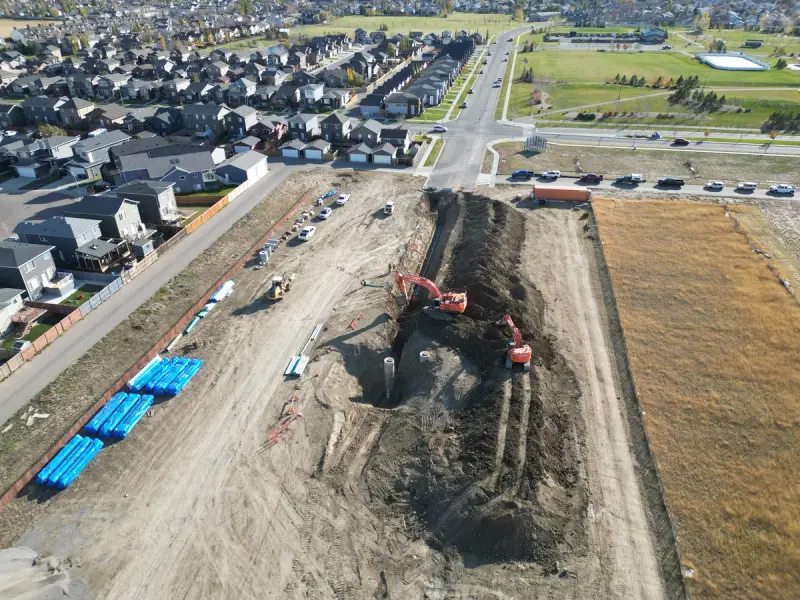
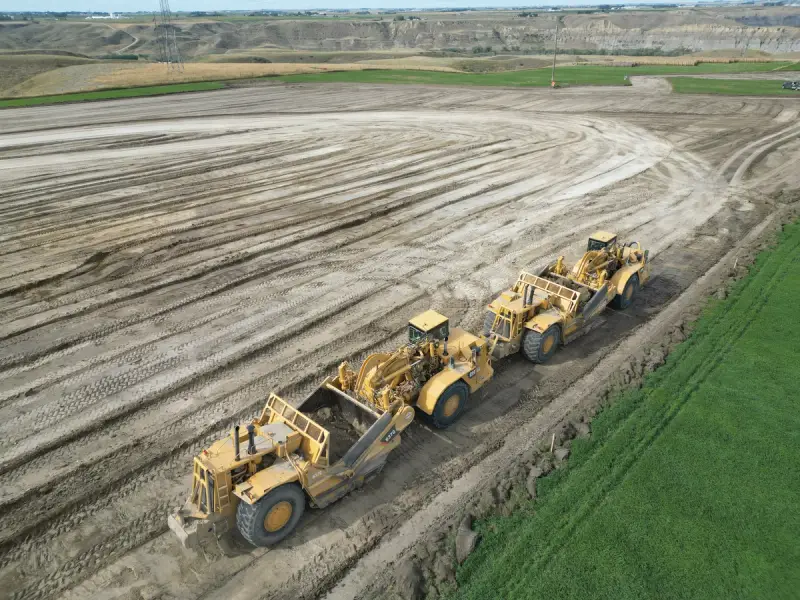
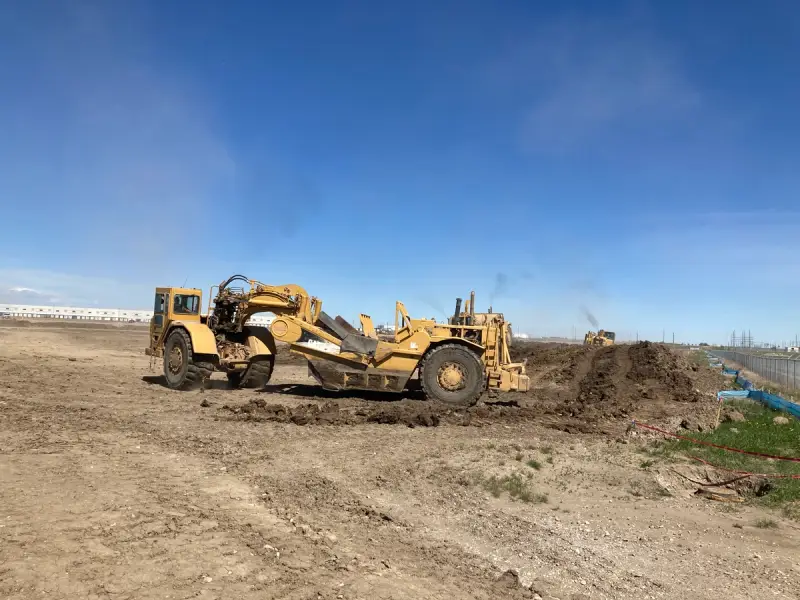
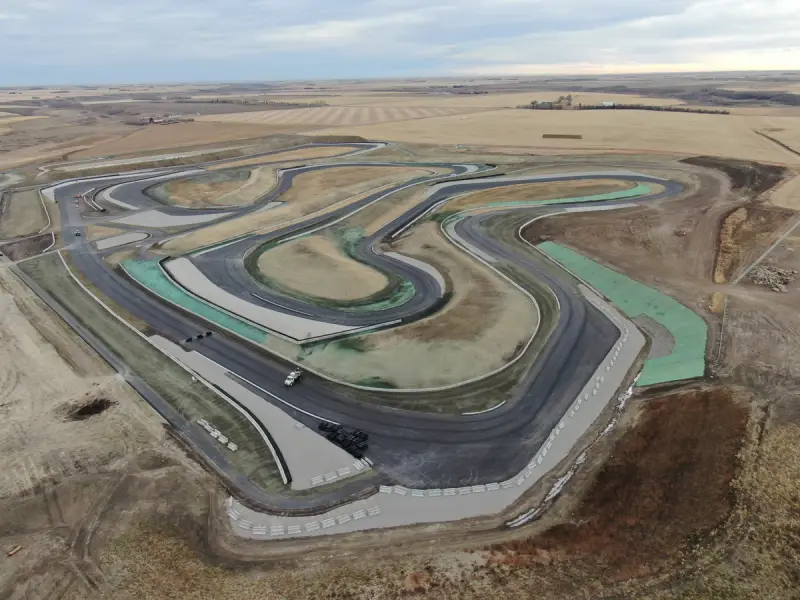
Whissell served as General Contractor for the full civil development of the Rocky Mountain Motorsports facility, a 3.5km racing circuit with 36m of elevation change located in an agricultural area of Mountain View County. The project involved one of the largest single-site earthmoving programs Whissell has delivered for a private client, combined with complex stormwater infrastructure, sound berm construction, and extensive landscaping.
- 925,000 m³ of material movement for track, road, storm pond, and berm construction
- 3.5 km circuit track construction with 36 m of elevation change; garages and paddock area
- Eight sound berms with sound wall fencing
- Three storm ponds, two automated single-pump pump stations, and a dry hydrant
- 500 m of culvert installation; 280 m of concrete storm line; 1,450 m of PVC storm line
- Upgrading of Mountain View County support roads (RR 10 remove and rebuild; RR 10A reconstruction)
- 475,000 m² of topsoil preparation and seeding; planting and maintenance of 395 trees and 1,120 shrubs
- 3,290 m of chain link fencing throughout the site
Challenge & Mitigation
The project site was surrounded by active working farms, requiring continuous communication with Mountain View County, farmers, ranchers, and landowners to maintain access during both harvest season and the construction season on county roads. Wet subsurface conditions encountered during earthworks required rapid response adjusting work sequencing, equipment utilization, and crew configuration to maintain schedule without compromising compaction specifications. The project carried a firm completion date tied to the facility's opening event.
Value Add Solution
When wet subsurface conditions threatened the earthworks schedule, Whissell's operations team rapidly reconfigured equipment deployment and work sequencing to redirect crews to drier areas of the site while allowing saturated zones to drain; maintaining overall production rates without the cost of importing granular fill to stabilize wet subgrades. This adaptive approach kept the project on track for its firm opening date.